Queued for Thought - Survivalist Insight, Part 1
Welcome to Queued for Thought, my curated podcast playlist designed to satiate your brain with insightful ideas!
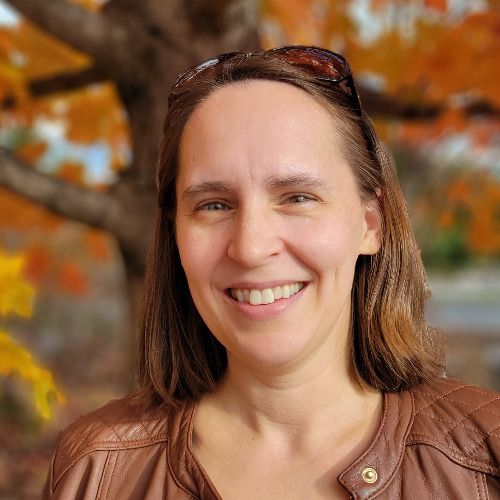
I'm Renaissance Woman Sara Kobilka, host of the podcast Connecting the Dots with The Renaissance People.
Queued for Thought is a project I created where we can practice the skill of connecting the dots between conversations happening in different realms.
My latest playlist addition connects the dots between conversations around being a “survivalist” and cultivating “survivalist skills”. It features podcast episodes from Connecting the Dots with The Renaissance People, The Anxious Achiever, A Slight Change of Plans and The Nature Of with Willow Defebaugh.
Check it out on the Listen Notes website. From there, subscribe to listen to all episodes on your favorite podcast streaming platform.
Instructions for how to find a podcast streaming platform.
Queued for Thought comes out sporadically when I’m feeling inspired. If you’d like to know each time a new episode drops, sign up for my Renaissance People Community listserv.
Transcript
I also host the podcast series Connecting the Dots with The Renaissance People, and this dot connecting is something that Renaissance People do really well. We hear people talking about things in different realms, and we see the connections and the similarities between those conversations, which allows us to think outside the box and come up with innovative solutions.
For this session, we are talking about the topic of survival and being a survivalist. We're in a time that sometimes the most it feels like we can do is simply survive.
As a parent with a couple of young kids, I sometimes describe that as trying to keep one nostril above the waves as I'm treading water. So here are four episodes of podcasts that address this concept from different angles.
[:[00:01:02] Sara Kobilka: We're actually kicking it off with one episode from my own show, Connecting the Dots with The Renaissance People. This is season one, episode nine, A Mind for Memory with Brian Skellenger, Survivalist. Here's the show notes.
This episode is a family affair! I'm joined by my younger brother, Brian Skellenger, the voice and creative spirit behind this podcast theme song. I also view him as a Renaissance Person, a label we debate over over the course of the episode in true sibling fashion.
In this episode, I share how my thoughts around the term Renaissance Person and the idea of a Renaissance Mindset have been morphing. We also talk about the pros and cons of having a Renaissance Woman as an older sister, how our parents' careers influenced our mindset. The power of improv and being drawn to fellow Renaissance People. And New York City is a hotspot for finding them. Plus, I think you'll be intrigued by Brian's thought process as he designed this show's theme song. At least I was!
This episode was the first time that I had come across the term survivalist. Brian mentioned that that was the term he felt most aligned with. He chose "none of the above" when I gave my usual list of Renaissance Person, multi-passionate, Jack, Jill, Jay-of-all-trades. Nope. Nope. He won't take any of those many different options I gave him. And he doesn't mean survivalist by somebody who is in a basement collecting cans of food.
He has his own definition of survivalist, which involves getting all of these different skills as he worked through his life, working in the arts. In fact, his instructor for his theater class talked about how you have to have those survival jobs. We think of the stereotypical role of being a waiter or waitress to make it on Broadway, for example. So he talks a little bit about that in the show.
And wouldn't you know it, but within maybe 24, 48 hours of recording that episode with my brother and him mentioning that term, I was listening to a podcast and the exact same term came up.
[:[00:03:01] Sara Kobilka: So this is the second episode that I will include in the list. It comes from The Anxious Achiever, episode 254 Why You Should Stop Labeling Emotions, Good or Bad with Dr. Susan David. Here's the show notes.
We're often taught to push away grief, sadness, anxiety, or anger, but what if those emotions aren't the enemy, but the key to resilience? In this episode, Harvard psychologist and bestselling author, Dr. Susan David explains why emotions aren't good or bad. Positive or negative. She breaks down the groundbreaking concept of emotional agility, the skillset that allows us to face our thoughts and feelings with curiosity, compassion, and courage, and then move forward, guided by our values. We also talk about why toxic positivity is so damaging. How difficult emotions signpost what matters most. And while learning to hold anxiety in one hand, and courage in the other, changes the way we work, lead and live. Tune in to learn how to stop letting your emotions dictate your actions and start using them as valuable data.
I mentioned that the term survivalist comes into play in this episode. It actually comes in just the last four minutes of the show, and it's not with the guests that was described. Towards the last, about 10 to 15 minutes of the show, a guest is invited on who's a listener whose name is Jesse Linton, and she talks about her experience of grief and having her husband diagnosed with stage four esophageal cancer suddenly while they were living abroad. She ended up having to be his caretaker until he passed. And she was simultaneously a job seeker because they suddenly had to move back to the United States to her husband's hometown, which was not her own hometown.
She talks about being a survivalist both in the skills that she had, and I think she applies a lot of what Dr. Susan David talks about in terms of surviving the time without describing our emotions as things like good or bad. Just taking the time to process and deal with them.
[:[00:05:02] Sara Kobilka: Another podcast that I listened to quite a while ago that really aligns with this comes from the podcast series, A Slight Change of Plans. It's Season 1, Episode 35, A Holocaust Survivor Story. Here's the show notes.
Edith Egger was just 16 years old when the Nazis forced her and her Jewish family onto a cattle car to the Auschwitz concentration camp. Today, Edith is 94 years old and a psychologist who specializes in post-traumatic stress disorder. She shares how learning to control her own mind helped her to survive the Holocaust.
Her big strategy that she talks about in this episode is the strategy of living in the now, and that is an example of another survivalist skill, another way of living when you've gone through so much. She actually talks about how she was never suicidal while she was inside Auschwitz. It wasn't until she got out of the camp that she had more of a problem.
So her story is just so powerful, so amazing. And I think it's kind of interesting in these times when we are hearing a number of people talking about, say, concentration camps for people who are being taken by ICE. And also the comparisons to the Nazis for some of the political leadership in the United States.
So, given the analogies that people are using, I think looking back to somebody who truly lived through the actual Holocaust and the Nazis, how she survived it, how she is able to move on is a valid perspective to take a look at.
And then finally, the last episode that I'm pulling is from The Nature Of with Willow Deffenbaugh. It's Episode 7 Bayo Akomolafe: How to Move Through Chaos Without Needing Control.
The show notes say, what if the rupture of these tumultuous times is not an ending, but an opening? In this episode, Willow speaks with Bayo Akomolafe. Philosopher, poet and thinker whose work challenges us to step beyond binaries and into the fertile, unpredictable space of emergence. They dig into how transformation doesn't come from rigid certainty or oppositional thinking, but from the cracks where new possibilities take root. Nature does not resolve tension. It composts it making way for something unexpected to arrive. Bayo invites us to see the turbulence of our moment not as a problem to be solved, but as an invitation to step out of the fixed way of being and embrace the third way, the space between and beyond, where new ways of relating, knowing, and becoming can unfold.
Some of the things that are discussed include the idea of slowing down as well as making a sanctuary as we're going through these really challenging times. So the times that are being referred to in this case are the modern times are the things that we're challenged to deal with. And nature is looked to as a good resource to help inspire us, maybe to use it as a metaphor for what's going on in the world.
So I encourage you to listen to these episodes, and then on the website I will have a recording of just kind of some final thoughts that I'll be adding later. You can listen to these episodes on my curated podcast list at listennotes-dot-com, where you can also subscribe to have them automatically added to your queue through your favorite podcast streaming platform.
If you need help finding a platform, I actually wrote a blog post about that on my website, and I'll put a link to that in the show notes as well as a link to this curated podcast list at listennotes-dot-com. I encourage you to listen, think, connect the dots, and absolutely reach out to me. Let me know what you are thinking, what dots you connected.
I look forward to hearing from you.