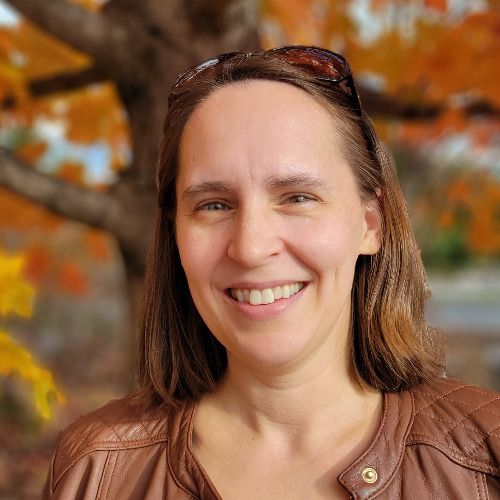
The Forever Revolution with Jenni Gritters, Multi-Passionate
Connecting the Dots with The Renaissance People is coming full circle for this tenth episode!
The woman I first encountered via her podcast, is now a guest on my own show! Regular listeners will know the name of my career coach, and fellow multi-passionate, Jenni Gritters.
In this episode, we discuss the importance of community, the evolution of our career paths, and the significance of embracing your complexity without apology (along with tips for explaining that complexity to others). We go off on delightful tangents around systems thinking, the role of coaching in our careers, and the power of intuition and imagination in decision-making. We connect the dots to neuroscience and etymology —two topics we both adore —and discuss how they can help us understand where we’re going.
And I found out a few juice nuggets that even Jenni’s most loyal followers might not even know about, so stick around to the end!
Promised Show Notes Materials (take a drink):
- Sign up for updates on my podcast and what's happening in the Renaissance People Community
- Jenni’s Book The Sustainable Solopreneur
- Waters Center for Systems Thinking – Habits of a Systems Thinker Cards
- LinkedIn post about teen specializing in the summer to prepare for college applications
- The Serendipity Mindset by Christian Busch
- World Builders podcast episode with Lindsay MacMillan
- An incredible study on imagination
- And another fun piece on memory & imagination
- That’s What They Say, Michigan Public Radio podcast
- Grammar Girl podcast
- Telepathy Tapes (Season 2 especially for the early science of more "woo" practices)
- The Latest Science of Growth Mindset with Carol Dweck ("The Psychology Podcast" on YouTube)
- The Clearing Jenni's"free monthly community gathering and community coaching session designed help you create meaning, release what isn’t yours to carry, and ignite new (collaborative) insights — timed with the seasons”
- The World Builders podcast | website
Follow Jenni on Social Media:
LinkedIn | Instagram | Substack
A few things Jenni and I discuss:
3:59 How Jenni helped inspire this podcast
5:18 Jenni’s many iterations
8:46 How Jenni created spaces of belonging as a multi-passionate
11:01 The appeal of journalism for multi-passionates
13:16 Pattern recognition and systems thinking
18:40 How naming eras can help explain your expanding identities
22:00 How freedom makes you magnetic
27:33 Thinking of our career as a non-linear journey
31:02 Thinking outside the box and using imagination to find inspiration
33:02 Trusting intuition and getting out of your own way
42:27 Improv Game
45:43 Shout out to our supportive husbands
47:14 Rapidish Fire Questions
50:39 Our shared love of etymology and neuroscience
54:0 The athletic and growth mindset in Renaissance People
Quotes from the episode:
(Jenni) We had children at the same time. We were like drowning in the pandemic at the same time. We were leaving our careers at the same time. So it's just, it's very much an honor to be here. And I feel like I've been with you for all the transitions that birthed this podcast too, like you said. So pretty damn magical.
(Jenni) I'm also the founder of a company that I am currently building called World Builders, which is basically an ecosystem, a hub for people like us to come in and learn how to step into our wealth and our visibility and all these things that come back to the fact that we were told probably for most of our lives, that our brains were not normal. And so it's a whole space of people like us, who are very explosively creative, who change their minds a lot. Who can't be summed up in one phrase. Right? I always joke, I change my bio on my social media profile like every three months.
(Jenni) But I'm not trying to make people like me anymore. Like I just think it's a zero-sum game. I don't think I'm ever gonna make sense to people, Sara!
(Sara) Yeah. We're too much. That's what I have in my LinkedIn About section, you know, I'm too much for some people and that's OK.
(Jenni) Totally!
(Sara) You've talked about a level of magnetism that I think comes about when you become more confident in yourself and stop apologizing for the complexity. Because other people want that confidence. When I've had career coaching clients, when I did my Renaissance Readers and we read the book Range, that's the number one thing people tell me that I am able to provide them, is increased confidence in their value as Renaissance People.
(Jenni) Mmm hmm. I know.
(Sara) Because the world has been telling them, you're too much. You're overwhelming me. For me, it was “you're the teacher's pet” because you want to be friends and you wanna please the teacher, which, OK, there's problems with the teacher's pet side of things. But, there's also the fact that I LIKED my teachers and they were interesting people and they're older than me and they know more than me. So I wanna learn from them!
(Jenni) And you love learning, right? I mean, I think that it's exactly right. People who are free are very magnetic.
(Sara) Your career is a journey with multiple stops. And you don't have to go one place and stay there forever. You go to all these places and you learn something there. And then you take it with you to the next place and then you make it even more fun and more exciting. And so that idea of “niche” implies one spot and you're just going to get even more and more specialized. And that's NOT where it's at! And that's not who's going to think outside the box because they're completely trapped inside the box! They're not the ones who are going to be innovative.
(Jenni) I love the phrase magic is focused intention. It's like that idea that yes, we get those downloads, right? Yes. We have these like flow states. I think our brains are just really primed to be that way. Us neurodivergent, multi-passionates, we're very creatively iterative, but you still have to do the action things, right?
Follow me, Renaissance Woman Sara Kobilka, on LinkedIn, where I put most of my social media energy and Facebook.
If you're extra curious, check out Renaissance Woman Consulting to learn more about some of the many types of work I do.
And should you care to support the production of this podcast, I'd love it if you'd buy me an oat milk cappuccino, the caffeinated beverage of my choice.
This podcast is hosted and edited by Sara Kobilka.
Theme music is by Brian Skellenger
Podcast distribution support provided by K.O. Myers of Particular Media
Transcript
[00:00:07] Sara Kobilka: Yeah, We're too much. That's what I have in my LinkedIn about section is, you know, I'm too much for some people and that's OK.
[:[00:00:15] (sung theme song) Connecting the Dots with The Renaissance People
[:Here's some other things we're gonna be talking about. We're gonna be talking about Jenni's many iterations. Like me, she has had that squiggly career path. We're gonna talk about how she actually cultivated and created spaces of belonging so that she, as a multi-passionate, had that type of community for herself.
We're both former journalists. And there is certainly an appeal to journalism for multi-passionate. We're gonna talk about pattern recognition and systems thinking, how naming eras can actually help you explain your expanding identities, how freedom makes you magnetic. We're gonna think about our career paths as a non-linear journey, and of course, think outside the box using imagination to find inspiration. And we'll discuss how trusting intuition helps you to get out of your own way. This is a great one! I'm so delighted to have Jenni join for this episode 10 of Connecting the Dots with The Renaissance People.
Do you wanna keep following everything that I'm doing in this space and other spaces? Visit my website, Ren Woman Consulting, that's Ren with one N, and sign up for my newsletter. I'll be giving you updates on everything happening with the podcast and more. 'cause as a Renaissance Woman, there's always more coming down the way.
In the meantime, here we go.
Hello, Jenny Gritters. I'm so happy to have you here today, and I'm gonna jump right in with my favorite first question, which has been intriguing for me. I'm gonna do this whole analysis after I've had a bunch of guests. But I wanna know for you, I sent you an email ahead of time of some terms that I've come up with that might align with your identity with full permission to say none of the above, which is a fairly Renaissance Persony thing to do.
So, the options that I have are Renaissance Person, multi-passionate, generalist, versatilist, Jack-, Jill-, Jay-of-all-trades, boundary spanner, or what other identity might align with who you think of when you think of yourself as that really complex person.
[:[00:02:59] Sara Kobilka: Oooooo!
[:[00:03:10] Sara Kobilka: Excellent. Now I ask you the question because you are also a writer and editor. I have been debating, hyphen, or no hyphen between multi and passionate.
[:[00:03:20] Sara Kobilka: Hyphen? OK. You're on team hyphen. I've gone back and forth on it and OK. I will defer to you then we'll put a hyphen in there.
So multi-passionate, ever-changing Jenni Gritters, I am beyond excited to have you on my show. Regular listeners will know Jenni's name because it's come up in almost every single episode.
[:[00:03:41] Sara Kobilka: And so I was trying to think of like, how do I describe your relationship with this podcast? And the initial thing that came to mind was, you're almost like the fairy godmother of it. But that doesn't quite align with some of your new terminology. So I'm thinking that you'll be the fairy priestess
[:[00:03:59] Sara Kobilka: ... of this podcast, if that works for you. OK.
And so, just to give a little backstory for me and how I know of Jenni, I went into the pandemic with a small child as a former journalist who, I had just had a kid, I had a dog with seizures. And rather than starting sourdough, I'd just started my own business.
And that was a scary time to start your own business, be a new mom, all these different things. And I think someone recommended her podcast to me. I listened to that podcast. And there were a couple of hosts, but Jenni had that similar background to me.
She was also a mom. She was dealing with a lot of things. I got the vibe of, hey, she's another person who has a lot of different interests. And so that was so helpful for me as I was starting off my business. And feeling really lonely. And trying to keep it all together. And then I've continued to follow Jenni through her many iterations and have been involved in her career coaching programs and bought her book, which is sitting by my bedstand and everything like that.
So I'm happy, delighted, thrilled to have you on the show. And I wanna give you a chance, this is the place where you don't have to shy from the complexity. You don't have to niche down. You were the first person to tell me, Sara, you're anti niche. That's OK. So tell me a little bit about your complexity, Jenni.
[:We had children at the same time. We were like drowning in the pandemic at the same time. We were leaving our careers at the same time. So it's just, it's very much an honor to be here. And I feel like I've been with you for all the transitions that birthed this podcast too, like you said. So pretty damn magical.
Um, OK. So when I think about my work, there are so many parts of what I do. So I am a mom. I have a three and a half year old and a 6-year-old. I'm a writer and I also had a long career as a journalist. I still write a lot, but not for clients anymore. I just write for myself. I wrote a book last year, it's called The Sustainable Solopreneur, like you said.
And I often say it's the reason I wrote it is because I stopped giving my words to my clients. And so I had a lot of words that then belonged to me again. And so I was able to write a book with them. I'm a coach and a mentor, a strategist, so I help people build businesses that are very unique sizes and shapes. That's the thing I'm most obsessed with, like helping to build things that don't exist presently.
Mostly because you and I both know our brains work very differently. I collect people whose brains work very differently. And so I'm very interested just from like a curiosity standpoint on how we build careers and relationships with work that makes space for all of us.
And then I'm also the founder of a company that I am currently building called World Builders, which is basically an ecosystem, a hub for people like us to come in and learn how to step into our wealth and our visibility and all these things that come back to the fact that we were told probably for most of our lives, that our brains were not normal.
And so it's a whole space of people like us, who are very explosively creative, who change their minds a lot. Who can't be summed up in one phrase. Right? I always joke, I change my bio on my social media profile like every three months. So those are some of the pieces of what I do. I also live in the woods, do a lot of yoga, you know, all those things. Yeah.
[:[00:07:49] Jenni Gritters: Well, I think it's because Sara, I always think about like, my brain can't just do the one thing. Like I always tell people, calling myself even a business coach is a little hard for me because I see myself as helping to liberate you, and that doesn't just apply to one area of your life. And so I think that's why a lot of us are like, OK, I do this same thing in people's bodies and in their minds and in their workplaces.
And then there... it like stretches all the way. And so it makes a lot of sense to me that most of us who were in there were also, we're like dabbling in all the different expressions of the thing we teach.
[:[00:08:46] Jenni Gritters: No. I mean, yeah, the honest answer to that is no. I was often told in jobs that I was too ambitious, that I, you know, needed to calm down, that I needed to stop proposing new projects, that I worked too fast.
And so I knew, you know, I, I knew for a long time. I do think freelancing allowed me to express more parts of myself, which was a really helpful era. I could do lots of different kinds of projects. I could, you know, help lots of different kinds of clients. As same with you, I never did well with a niche. And so I remember actually when I got laid off from my job at Wirecutter, they said, well, you're just too much of a generalist.
We don't really know where to put you because you do everything. And so, you know, was it valued? No. And so I think that's part of why, you know, it's interesting. I said today in a call with a group of people I'm leading. I didn't go out to be a community builder. Like that was never really my intention.
I was a coach, I was a storyteller. But it was almost like, it made a lot of sense to gather people who were having the same experience I was. And I think I was actually kind of early in that accidentally, right? Like during the pandemic, a lot of us started spending more time online and left our jobs and there was just a void, I think.
And so people naturally just kind of like grouped up around me and so I would create spaces for it. The first time I really felt like I belonged, I think, was in those spaces though the Parents Who Freelance Program, which I ran way at the beginning of the pandemic, was probably the first place where I was like, oh, there are people like me, you know? Maybe I don't need to fix myself. Maybe this is a superpower.
[:[00:10:28] Jenni Gritters: Yes. It was called ADAPT. So it was people who were going through deep grief, chronic illness or caretaking. And it was a huge program. I mean, I look back, I think we had 40 plus people and some of them still meet now. That was like four or five years ago. They're having a retreat, some of them in a couple months.
I think it's important to say, it's never been like a business thing for me. It's been a belongingness thing. And so people have stayed friends, you know, it's really common that yes, SUSTAIN, the big program I ran, ended. But you all will stay in touch. That's how it's always worked, you know? It's special. But I think it was that I didn't have a place to belong either. Right? Make it! Yeah.
[:The idea of being like a more general assignment reporter was kind of appealing to me. ' cause then I could tell a story about like a dog park opening one day and then a story about like a murder the next day, which I didn't like. But the variety at least that I thought was going to come from journalism was part of the appeal of getting into that field before I realized what it would really be like to work in that industry. Did you have a similar?
[:For a while I wanted to be a foreign reporter, but then realized that wouldn't really be great for my lifestyle if I wanted kids. And so it is true, I like got into journalism thinking that it would be a way to sort of scratch that curiosity itch to meet a lot of people. It seems like there were a lot of different ways that your career could go, right? Like I could change my mind.
There's this joke that I only ever stay in jobs for like eight or nine months, which is really true. My husband jokes about this because I just like need, I get bored. And so it seemed at the time, to your point, that journalism would make that possible. Now the industry collapsed in ways that made that less possible for us, but I do think it was a, like idealistic, it seemed like a good place.
You know, the other job I interviewed for after graduation, I could go to grad school or I could get a job writing about KitchenAid mixers at Amazon. And I took the grad school job. Yeah. But you know, sometimes I think about like, if I had, you know, taken that Amazon job, I would've been in Amazon very early on and my husband's like, you would never have stayed. Like, what are you talking about? You know! It was not to be, you had.
[:[00:13:03] Jenni Gritters: Totally, I did get to do it.
[:[00:13:06] Jenni Gritters: Exactly.
[:Well, I see this a lot, but I'd like to hear from your own perspective. Where do you find yourself connecting the dots the most?
[:And for me, my brain started to understand that that was sort of a surface level issue. And there was tons of stuff going on underneath. So at the moment, I'm really interested in connecting the dots on the ways all different modalities, like from psychology to somatics, to spiritual practices, to like very linear practices can all contribute to getting people sort of unstuck at the root cause.
I mean, probably similar to you, I have really strong pattern recognition. And so as I work, I think it's maybe something that a lot of multi-passionate people have. Like, we're, we're almost like able to back out of it a little bit and see what's going on. And connect something that other people might not be able to.
And so for me, like I'm running a money program right now that is really unique because it's really combining like all these different modalities. And to me that's very interesting to my brain. But it's all in service of sort of unlocking people from the cages they think they're in.
And then I get all obsessed with all the dots that are connected sort of more broadly as to how the systems have created these stuck spots that we're in. And how our powers connected to that. So that's a long answer to the question of like, a lot of it is actually people's personal journeys where I'm most interested in connecting the dots across many different disciplines.
[:And it's the Waters Center for Systems Thinking that I got involved with when I was in Tucson, Arizona. And so we were doing a STEM conference, but we wanted to challenge the norms around STEM education. And so I had heard about this kind of systems thinking training that they were doing. And it was originally in classrooms, but then they've expanded it and they're talking to business leaders and all this sort of stuff.
And they have these cards that are the habits of a systems thinker that I think you would really enjoy. They're almost like tarot cards. But they have pictures on them and they talk about things that people who use a systems thinking perspective are really good at. So looking at causes and effects, looking at things that have short-term responses and things that have long-term responses.
And all these different things of just really thinking about everything, whether it's how a person's life has evolved, whether it is the problems in the world right now, and taking that systems perspective, which allows you to see a big picture, but also get into the nitty gritty details. 'cause when they talk about like, are you a big picture person or are you a details person? I'm like, I fly between those. Like I'm not stuck in one of those things. There's value in digging into a very specific thing, but then there's excellent value in finding the golden thread or seeing those big picture things as well.
[:I mean, World Builders is designed, the tagline is, as systems crumble, we build. And so there's a lot of thinking about what's going on here, big picture? Why does this matter so much? And how can I help you on an individual level be able to step into seeing things and doing bigger work? I think on a macro level. So I love that. I feel like I'm gonna go get obsessed with it now.
I mean, and that's, to be honest with you, Sara, that was always my problem at jobs was I couldn't just put my head down and do the thing. Like that was a complaint I would get from bosses. I would be like, but we're going in the wrong direction. Like, I don't understand, you know?
So as an entrepreneur, I actually think that's come in handy, right? You and I both have that where we can zoom out and we're allowed to do so and it actually helps course correct. Maybe before we go into the wrong place.
[:[00:17:42] Jenni Gritters: Totally, a hundred percent. I always have a coach I'm working with. And I pick them very specifically for the eras that I'm in, right?
So right now, the woman I'm working with is less, I mean, she's a strategist and she can help me with that, but I kind of got that part down. More, I need help with the nervous system patterning, the sort of intuitive work, the, am I trusting myself? I need to delegate and hire people. How's my nervous system feeling about asking for help? Right? So I very specifically pick people who I think can kind of call me out, because I don't think we can always see that in ourselves.
[:[00:18:11] Jenni Gritters: Even though we want to, yeah.
[:And that's why that'll lead perfectly into the next question, which is a thing I've struggled with. I'd love to know through the different eras, what strategy have you used to explain your complexity without overwhelming people, but also without feeling like you're losing an important part of yourself, which might be the fact that you are complex.
[:And, I was saying to my coach actually a couple days ago, like my businesses in the past, a lot of them have been built for people to like me, for me to make sense. And I'm actually stepping into an era where I don't think that's as possible. Like what I'm doing now is very... it's just so different. I'm not even sure I know how to put words to it yet, but it's like I don't need to prove myself.
This is an incredible ecosystem I'm building. It's necessary. I, for whatever reason, that has finally fallen off the back. I don't feel like I need to explain. Now, I have been sharing right, as an invitation to come along as the complexity grows yet again. But I think it's coming from this place of not needing, like, I like myself now and I accept myself now.
And so that's what I mean when I say there's like root cause stuff that kind of goes underneath it. I mean, there's also a practical element to this too, that I know you and I have talked about a lot of, like, but how do I make it make sense, right? So
[:[00:19:57] Jenni Gritters: yes. Yeah, totally. And so I think there is something to bridging, especially when you're expanding identities.
So this has happened to me a lot, right? Like I'm a journalist, OK, now I'm a freelancer. OK? I'm a freelancer, OK? Now I opened an agency, OK? I opened an agency, now I'm a coach. OK? I'm a coach and now I'm right. And so what I often try to do is sort of bridge people from one space to another with intention.
So I might leave that part on my bio, right? Like I might leave that I'm the author of the Sustainable Solopreneur and the founder of that body of work in my bio. I'm not just gonna like ditch it ' cause it helps people understand the evolution. And I often create programs and pieces of writing. How do I wanna say this? That like, still talk to the group of people who was with me in the previous era.
So like, my CREATE program right now is a really good example of this, where it still is a tactical business building program. It's kind of from the old era of my work, but there are parts of it that have intuition and, you know, visualization work that kind of bridge into the new World Builders body of work.
So I am thinking about it almost in like a relationship sense, if that makes sense. Of like making it clear this is what I'm doing and like, do you want to come? But always keeping it as an option. But I'm not trying to make people like me anymore. Like I just think it's a zero-sum game. I don't think I'm ever gonna make sense to people, Sara, like.
[:[00:21:18] Jenni Gritters: Totally! And I think it's taken me so long to get to that of just like, like someone said to me the other day, like, it's just so wild that you're so fast. And I was like, OK. You know, I think previously I would've said like, well, and then, duh duh duh and I like have trained and so that's why I'm so fast, whatever.
[:[00:21:13] Jenni Gritters: I was just like, no, I am very fast. That's just true. And if that intimidates you, that is your stuff, you know? And like, I don't know what else to say about that. So, but it has taken me so much work to be safe saying that. And I think I've watched you do this exact same work of like, this is how I am. And I'm great. And me having all these things makes me very good at what I do. But I've had to build something very special to work for my brain. I can't have a business that looks like everybody else's and be fully expressed. Right?
[:Like that has been when I've had career coaching clients, when I did my Renaissance Readers and we read the book Range, that's the number one thing people tell me that I am able to provide them, is increased confidence in their value as Renaissance People.
[:[00:22:40] Sara Kobilka: Because the world has been telling them, you're too much. You're overwhelming me.
For me, it was you're the teacher's pet because you want to be friends and you wanna please the teacher, which, OK, there's problems with the teacher's pet side of things. But, there's also the fact that I liked my teachers and they were interesting people and they're older than me and they know more than me, so I wanna learn from them.
[:Everybody says I'm doing a good job, right? That's what we were trained to do in school. It's getting good grades, it's making the money, it's being very visibly accepted. That's being externally referenced. The problem with that. And like, yes, we need relationships and yes, we need community. But the problem with that is that it's not within your control. Other people are then determining if you're safe or not.
Versus being internally referenced is, I know who I am, I'm doing what I'm doing on purpose. And I've done the work to like myself. And that is so stable and solid that I think it's super magnetic. People will say to me like, I don't know what's going on with you, but I think I want it because it's like a feeling, you know? It's a feeling of stability and I wanna say very loudly. Like I was not this way. Right? Like I was the oldest daughter, I was the straight A student. I was like the overachiever.
[:[00:24:01] Jenni Gritters: We both were, right? So it's like, it's taken me a long time to learn how to be safe with myself and very sure of myself. I think. Not second guess my decisions. Like I've got my own back now. Right? And so you're exactly right. It's just very magnetic.
And especially now there's just something going on now where I keep saying to people, we're like birds in a cage and we've realized the door's open, but we don't even know what's out there and we don't know if we can fly and we don't know how to jump out.
And so people are kind of like looking, and I think those of us who are multi-passionate just knew this like five years ago and we're already out. And so there is a magnetism to like, wait, is there more choice? Wait, can I be more fully expressed? Wait, can I be weirder? You know? We're outta the cage. We always knew the door…
[:[00:24:44] Jenni Gritters: …wasn't locked anyway.
[:And then as time has gone on, more and more of you has come into alignment and the confidence has grown with more and more of you, even though you've always been very open about, yeah, there's still parts to me though, that aren't a hundred percent confident
[:[00:25:33] Sara Kobilka: They don't have to ever be.
[:But you're right, it has come in chunks. And I will also say, I think that's something to pat myself on the back that I've done well is naming the eras for myself. And that helps people understand where I'm going to the point of like, wanting it to make sense for people.
I think I have often tried to be very clear about naming where I'm going, and that means not everybody's coming, right? Me saying, OK, I'm stepping into being more of a visionary, more of a CEO. Like this is a bigger thing. I'm talking more about energetics and spirituality, plus all the practical things.
Not everybody's gonna love that. But at least I feel like I'm not dragging people around with me who don't wanna be there. Right? Like there is this element of, there's kind of a natural ebb and flow of who's coming with for each era.
But if I can give advice to anybody listening, I think naming the identities you're stepping into has been very helpful for me as a multi-passionate person. So I feel like there's some grounding in like where I'm going, right? At least for me.
[:[00:27:05] Jenni Gritters: Totally. I feel like this is what you and I have gotten to work on a lot too, with your story is like, it's not dumbing us down. But it is in some way using narrative to invite people into a conversation. And I think when we've been told that we have to stay small, like any kind of structure feels like a trap at first.
But there's nuance there, right? Of like, OK, I can provide a little structure to this so people actually know that I'm the person who helps them with fill in the blank. Even if that thing you're helping them with is changing all the time.
[:And I just commented on something that was like the trending topic on LinkedIn, which is about how college sophomores are now having to specialize what they do in the summer for the career they want. They're trying to get 16 year olds to specialize for the career that they're gonna have. Which, 1) It doesn't make sense. So many of the jobs don't even exist right now that the kids who are 16 will have.
And it's not a singular, ' cause your career, like I talk about, is a journey with multiple stops. And you don't have to go one place and stay there forever. You go to all these places and you learn something there, and then you take it with you to the next place and then you make it even more fun and more exciting.
And so that idea of like niche implies one spot and you're just gonna get even more and more specialized. And that's not where it's at. And that's not who's going to think outside the box because they're completely trapped inside the box. They're not the ones who are gonna be innovative. And whether you wanna talk about scientific research on that innovation, or you wanna talk about spirituality and people who are open to ideas, everybody's saying that's not where it's coming from.
[:But the path is not that linear anymore, nor does it serve us for it to be. I end up working with a lot of people who have sort of like latched their whole identity to one career. With journalism, that's a big one, but there are a lot of other sort of like identity latches.
And to be honest, it just, it's like miserable. You know? I don't know that it serves us in any way. It does feel like a shortcut to meaning, I think for some people, at the start of like, oh, OK. It's like journalism conveys a certain way of moving in the world, and so you want that identity archetype. But over time it means you can't l eave because then you don't know who you are.
So what we're talking about is like, instead of, you know, I like to ask my kids instead of, what do you wanna be when you grow up? I ask them, how do you wanna be when you grow up? Like, what things are interesting to you? You know, like it's more about that self again, the self-directed, knowledge.
Right. And the self-referencing
[:[00:30:20] Jenni Gritters: Love.
[:[00:30:23] Jenni Gritters: Yeah. You know, it's interesting, my kids go to a Montessori school, um, a charter school. So it's Montessori upper grades, and I think I also actually went to a Montessori school, early through kindergarten. And the whole premise is like, chase what lights you up? Right? Like, whatever you're curious about is what you get to learn.
And it's very interesting to watch my 6-year-old because he just has no, he just learns about whatever's interesting to him. He's gonna be like us. Of course he is! There's no way he won't be. Right. It's like that's how his brain is being trained to move in the world.
And I mean, it's part of why I'm setting up World Builders the way I am, because we need more visionaries. Like we do need people who are seeing outside of what exists right now. Because what exists right now is quite broken.
[:people. Not to say I'm all anti AI. There is a place for it. It can help with mundane tasks and all that sort of stuff. It's great for weather forecasting, but in a different way. It's not a good forecaster, but it's good model.
But people who can think outside the box, who can connect the dots, who can draw from an undergraduate degree, a minor in Italian and psychology and a master's degree in journalism and be into spirituality and can draw from all those things and see those connections. AI is never gonna be able to do that because all it does is regurgitate what's been done before...
[:I remember thinking someone tried to talk to me about investing in like financial systems that were really rigid and I was like, I do not understand. Like my brain literally doesn't get that.
And I used to think it was because my brain was broken. Turns out, I think I just could see that that wasn't gonna get me where I wanted to go. And I, I would say things like, well, but why are we just hoarding money? Why don't we just have an elder care system, you know? And people would look like at me like I had seven heads. And it's like, no, like, do you understand? Right?
So I think a lot of us have been sitting there wondering, am I broken? And I feel inclined to say the system is broken and your brain is actually very well equipped to think of something completely new and imaginative and profoundly different, which we really need right now. We really, really need it.
[:[00:33:02] Jenni Gritters: Yeah, it's such a good question. I have so many thoughts. I mean, it's partially nervous system. It's also why I've gotten obsessed with intuition as a teaching tool because when I talk about intuition, I'm really talking about sourcing information from this like subconscious creative part of your brain before you immediately go into strategy.
Because I think brains like ours, we're really good at trying to put it in order and make it make sense for everybody. And so we almost skip all the creativity and the juiciness and get right into the, like... we squeeze the life out of the thing is often how I describe it. Right? We just like get way too rational about it way too quick and then we spin and we spiral and we're super anxious which is a lot of wasted energy to be honest. Right?
So I think for me, when I started getting introduced to intuition, which, however you wanna just like understand that some people would say it's God, some people would say it's your wise self. Some people would just say it's like quieting down enough to listen to what you actually want. It sort of changes your relationship to self-judgment is what I would say.
It's why I'm so interested in it because it turns on this imagination part of your brain. You've done visualizations with me, right? It's like you see things and then you make decisions in a different way where I think you're more sure, but also you have less of a grip on it.
And I'm not sure I completely understand why that happens yet. It definitely has to do with the way you're talking to yourself, where that information is coming from. It comes from this like place of childlike trust that I think we struggle to produce as adults. And it stops us from over analyzing to a certain extent.
So I will say I'm doing this right now with the CREATE program, which is the eight-week program where people build new parts of their businesses and people are launching offers. And this thing is happening where they're like, but it's not perfect enough yet. And what if people don't like it? And what if, whatever.
'Cause it's kind of like, I mean, a lot of the offers are like way out of the box. Right? Like totally wild. And so I think at least it came in from an imaginative place. And so they're almost like not even able to fit it into anything they know. So they can't even judge it in the same way.
But that's where the nervous system work comes in. It's called autonomic toning, right? So how do you get your brain used to the fact that there could be safety and iterative exploration, there could be safety. And that's the internal safety stuff, right? But your body will have a response like people's bodies respond as if they are dying sometimes, um, when they're not. Right? And so that's tapping and walking and jumping and dancing and moving your body and talking to another person. And like there's this whole toolkit.
So I know that's a long-winded way of saying like, I think we almost have to come through the side door to come up with the ideas and then put them in an entirely different category and then take care of our bodies as we're trying to put it into the world.
[:And kind of like you were talking about where you draw from all these different areas, you look for the kind of a golden thread or what are these people saying that could be really applicable to these people?
And it came to me while walking the dog, while I'm not sitting at my computer trying to type out a plan. It's when you free your mind that you get to have those ideas come in.
And then a second tangent. ' cause tangents are so much fun.. One of my favorite things I read when I was in atmospheric and oceanic science as an undergraduate was a paper that our TA assigned to us. And what it was, was looking at meteorologists and who is most accurate in their forecast.
And if anyone says to me, if I could be paid to be as inaccurate as you are, I'll, I'm gonna throw a pencil at them because that's the funniest joke I've never heard.
But anyways, so they made a square and there was four different spots. So the X axis was a younger, less experienced meteorologists, older, more experienced.
And then the other was whether they relied more on the computer model or whether they relied more on intuition. And guess what? The older meteorologists who relied more on intuition to make the final call on their forecasts were more accurate than the ones who just relied on that computer model. And that really stuck out to me.
[:And I was like, you know what? I'm just gonna trust it. And my brain is like screaming at me. No one's gonna sign up. This is so outlandish. You know, I have 62 people in there. It was a $10,000 launch. And so I'm starting to get proof to support that. But I think it's really important. I remind people a lot, your rational brain is not necessarily gonna feel like you can trust this. Which isn't because you can't. It's just 'cause you don't have evidence that you can. Like this is a really different way of making decisions and moving in the world, right? And so, at least for me, no one around me is doing it. No one in my family has ever done it, right? I just kind of feel delusional half the time. And yet. More people are being helped. My business is growing. I am healthier. Right? And I don't get stuck in this spin cycle as much.
It's like I do that, I go out on a walk, I get an idea. It's like I just have to get outta my own way. And like,
[:[00:38:33] Jenni Gritters: yes!
[:[00:38:34] Jenni Gritters: Like Like I, and I have people on my team now, right?
So I just have to force myself to be like, Jenni, just give it to them. Like go give it to them and they're gonna upload it. Like you have to stop futsing with it, which is a thing we do to try to protect ourselves, right? So it's why I'm so obsessed with this body of work.
It frankly has nothing to do with spirituality. It has to do with accessing parts of our brains that are just better at moving at a higher speed without cost to us and coming up with new ways, right? This is what I mean when I say I get obsessed with just kinda like what's the quickest route to the thing? And intuition is a pretty quick route.
So, it's interesting, right? And I, if you told me two years ago I'd be doing this, I'd be like, what? Which is the beauty of the multi-passionate journey. I'm like, OK, surprise me. What's next?
[:One of my favorite books that I've read in the last like five years, which we'll put in the show notes, is Serendipity, the... oh, I forget. I'll have to look up the correct title of it, but it's both the scientific side of serendipity and the more spiritual take on serendipity. And I wanna say that the author was a science journalist.
But it's a really interesting thing because that concept of serendipity, like does this thing magically come out of nowhere? Is it a higher power that caused it? Or can you also plant the seeds, to use that gardening metaphor, that end up leading to it. Not every seed comes up, but are some people more lucky or are they in a way doing some of the work so that they can take advantage of luck when it strikes and when they see it.
[:And so I think there's this magical combination for people who learn how to kind of get out of their own way and just like take a couple quick actions in that more iterative, experimental way that you talked about that I see in my business. Coaching is probably like the number one determinant of people whose businesses change the fastest.
It's willingness to listen and be a little still and get the idea, but also willingness to put it out there, right? And not hold it and futs with it. And that again, is the stuff that's like us trying to protect ourselves, which we, most of us were taught as kids.
Someone described it to me the other day, you can't see me, but I'm putting two hands in front of my face and it's like we're pulling back one hand and then we're pulling back the other hand and you're like, oh wait, now I can see, like, we don't even realize that there's so much conditioning and protectiveness between us and the thing that we want. Like that is my job, right? As a coach is just kind of like, OK, peeling that one back and that one back now.
[:[00:41:06] Jenni Gritters: ... to make it easier, for you to get your good ideas in the world. It's not actually my job as a coach to come up with the ideas. And that's where I think coaches get into danger, which is a whole other rabbit hole. But like, you can't do it for people, you know? It has to come from them if it's gonna work.
[:[00:41:33] Jenni Gritters: Yes, exactly. I have a client right now designing her business as a playground. It's like a community playground. And so she drew this picture and she's like, this part's the slide. And OK, this over here is where we're all having lunch at the table. And so each program is designed like the lunch table is like this small pod community thing, and this slide is something that's like very rapid.
And so her brain is just like on fire as she builds. There's no way I could build any of that. It exists within her. And also is coming from this sort of childlike joy place, which then makes it super magnetic. So people want to sign up, right? But it has to come from inside of you.
It has to come, I think from the imagination, little kid joy side, which I just think those of us who are super curious, never really lost. I have a friend whose kid always tells him he's a kid adult. And I'm like, that's exactly right. Like you should see the way I run my business, I have like gel pens and a sketchbook and you know this, right?
So it is very imaginative. It's fun and it's magnetic to your point, makes selling a whole freaking lot easier.
[:[00:42:27] Improv Game
[:I was gonna say this even before you said it, but you know, your Renaissance Person if is the sentence you're gonna complete. And so mine is, you know, you're a Renaissance Person if you're described frequently as having a childlike sense of wonder, curiosity or playfulness.
[:[00:43:07] Sara Kobilka: It just going on and on. Should we do it again? Should we do another one? OK. You know, you're a Renaissance Person if , in almost any conversation you have, you can find something to be curious about because you're really listening.
[:[00:43:35] Sara Kobilka: Something like that. Like you're jealous of the character Tonks in Harry Potter who can change her hair and her looks at will. She's my favorite character of all the female characters almost probably all the characters I love 'cause she can...
[:[00:43:47] Sara Kobilka: ...at will change herself.
[:[00:44:02] Sara Kobilka: We're just going again. I love it.
Oh, and I forgot to mention something. So you have a podcast and one of your very first guests on the podcast made me squeal with delight out loud, which was Lindsay MacMillan. Because you were talking about when she was a child . And she specifically said that she wanted to be a Renaissance Woman
[:[00:44:25] Sara Kobilka: With that exact phrasing! And I was like...
[:[00:44:48] Sara Kobilka: Yeah!
[:[00:44:51] Sara Kobilka: Yeah. They're so much fun. They're our community.
And also, they are not limited. I've had people ask, they're like, oh, Renaissance Woman. So this is just for women. It isn't limited to women. It isn't limited to women and non-binary people. There are Renaissance Men out there. But I think it's the men who reject society's expectations of what masculinity is. It's the men who are comfortable enough inside themselves to talk about emotions, to be complex, that sort of thing.
And that's perhaps fewer of the male population than it is of women and non-binary people. But if you are a man listening, you can also be part of this.
You are not excluded. You and I both have wonderfully supportive husbands who follow us on our whatever's next. They're like, OK, buckle up, we go.
[:[00:45:45] Sara Kobilka: Yeah! That's what I like to think!
[:[00:46:08] Sara Kobilka: Yeah. Every year I say to my husband, on the Facebook I love you announcement. It's, you are my rock.
[:[00:46:15] Sara Kobilka: You're the steady, the thing that keeps me from flying off in the world from completely getting discombobulated when I have a new idea. 'cause if it was just me all by myself, we might be in a little bit more trouble.
[:You know, the other thing I would say about the fact that I think a lot of this conversation about Renaissance People applies to women and non-binary people right now, because we're in this moment of like, all this repression that has gone way back for, you know, all the women in my family lineage super repressed, not fully expressed.
Like there's just a reclamation happening right now too. So I think that's why it's not exclusive of men, but there's just a lot of conversation for it with women right now. 'cause at least in my coaching practice, there's a lot of us going like, wait, what I was given is maybe not the thing I would like to carry forward.
Wait! You know, like for us, I wanna be a present parent and run an ambitious business, but also not fry myself doing either thing. Right? Like we're really pushing those boundaries of anything that has been possible before. So, I just love that you're having this conversation and it makes sense for right now. Makes a whole lot of sense. Yeah.
[:[00:47:14] Rapidish Fire Questions
[:[00:47:28] Jenni Gritters: Hmm. Talk a lot about owl and squirrel energy when people are trying to understand the parts of themselves that are like that quiet, intuitive voice versus the anxiety voice. 'cause a lot of us don't know the difference.
And so for me, I've used the metaphor a lot of like I'm stepping into my owl energy. I'm stepping into that quiet and that wisdom and that listening, which is very different from the version of me that's been like really busy. She's more squirrel energy, she's like collecting the nuts and we love her and she did good work. But that metaphor part of my sleeve tattoo, I'm getting an owl on it 'cause it just really lands for me that like whole energetic of an owl feels right for even how I'm like spending my time on my calendar, to be honest. Just like a little more time and quiet. A little more observation.
[:[00:48:32] Jenni Gritters: I know.
[:[00:48:33] Jenni Gritters: I know.
[:[00:48:35] Jenni Gritters: Yeah, owls are really fierce too, right? So they're scary sometimes. And so I think there's this element of me like owning my fierceness.
But also that's the visionary thing. You know, making sure I'm seeing, making sure I'm asking important questions about like, do I want this business to work in this way just 'cause I've seen everybody else do it this way? What am I gonna do with the revenue? I mean, there's so many big questions that if I'm sort of going in squirrel mode, I'm not gonna, get the answers that I want
[:[00:49:00] Jenni Gritters: Or that are innovative or visionary.
[:[00:49:09] Jenni Gritters: Exactly.
[:[00:49:18] Jenni Gritters: Mm.
[:[00:49:21] Jenni Gritters: Yeah, I'm really obsessed with imagination. Um, and so I've been looking into the science of imagination and sort of also working through why do visualizations work so well for my audience. So, you know, you've been in my programs. And I often like, it's like a meditation, but I guide you into a scene. And so I've been learning a lot about theta brainwave states and the way your brain becomes really plastic when you're in those spaces and how it allows you to, it's like when you come back, you bring that with you, sort of the brainwave state that we were in from zero to seven.
And so I've just really, I've been listening to podcasts about imagination. You know, for me it's like, yes, this is spiritual stuff. It can kind of seem woo-ish, but there's also a lot of science. And so I really feel like it's important to be able to explain the science to people as well as a bridge. So yeah, I'm really, I'm just really obsessed with imagination and how imaginative we all were as kids.
You know, your kids like create worlds every damn day. And so how do I teach adults to do that, you know? So it's a big rabbit hole for me lately.
[:[00:50:27] Jenni Gritters: Yes! I 'll send you a few favorite resources. Yeah. But I just, I'm obsessed with the way that... brain plasticity is very real. Right? And, and what ways do we have to step into that more agile, creative state is like fascinating to me.
[:[00:50:51] Jenni Gritters: Etymology.
[:[00:51:07] Jenni Gritters: Oh, I'm obsessed. You know, I love
[:[00:51:10] Jenni Gritters: yeah, I love root words. You know, when you're in my programs too, when you're in those visualizations, people get words or phrases. So usually I go in and pull the root word and I'm like, it's this, you know? It's like the whole wealth thing. The root of wealth is wellbeing, which is like, oh, OK. To me, that makes it all, makes so much more sense. So, I'm obsessed. I also, you know, when I was doing journalism work, neuroscience was one of my beats. So
[:[00:51:31] Jenni Gritters: I love this. I love it.
[:[00:51:38] Jenni Gritters: I want to understand how the brain works. Right. I just think it's fascinating. So I am Yeah. Deeply obsessed.
[:[00:52:06] Jenni Gritters: Yeah. I mean, I, I literally was, that was my major so it's just... yeah.
We love to know how the human brain works and I think. You know, there's like endless information. There's also a lot of new information that's coming out around intuition and like energy work and what does that mean? So, I just love kind of learning about that stuff.
The Telepathy Tapes is a really, you know, interesting take where a journalist is looking at a lot of the intuitive work and asking like, what is the science that applies here? So, it's so fun.
[:OK, well last question and then you can tell people how to continue to learn from you. So it is, what is some quick, unique thing from your background that might surprise people?
[:But it was very, our football team was very bad, so the boys on the football team joined the cheerleading squad and competed with us during the off months, and so we were really good. Um, and my gymnastics background meant I was like flipping around. And so a very finite era for me, but, an era I had nonetheless. Would not repeat it, but, you know, it was, it was fun while it was, you know, curlers in the hair and like big bows and all the things.
[:[00:53:37] Jenni Gritters: cool.
[:[00:53:39] Jenni Gritters: Yeah,
[:[00:53:43] Jenni Gritters: Love it. The trampoline people are always like very, like, that's, it's so cool.
[:[00:53:57] Jenni Gritters: Yeah, I'm sure they do.
[:[00:54:00] Jenni Gritters: I know. I love that. Yeah. I mean, I do think the, like athletics mindset, like a lot of the people I work with have some background in athletics and it makes us good entrepreneurs to some degree because we're a...
[:[00:54:10] Jenni Gritters: ...little competitive, you know? We like kind of like to win...
[:[00:54:13] Jenni Gritters: ...things, so...
[:[00:54:35] Jenni Gritters: Yeah. I absolutely agree. It was good. The, the cheerleading was good training for me.
[:Well, I'm gonna finally just let you tell people where are the best spaces to follow you right now. We're not promising that if you listen to this eight months from now, that it's gonna be the case…
[:[00:54:52] Sara Kobilka: ...but for now.
[:And then I also have a podcast called The World Builders, where I'm interviewing people who are visionaries and asking them very specific questions about the worlds they're building, the value systems they have and how they're doing it, which is the part I really wanna know.
And it's very cross modality, so I just talked to a movement instructor. I have somebody who works in the voting space, somebody who works in medicine coming up. So it's very cross modality, which I'm loving as well. So those episodes drop every Wednesday. And then you can also find me on Substack. I decided I'm gonna hang out there. The Substack is called The World She's Building, so I'll give you all these links. But that one is very me. It's like very behind the scenes blog style of what I'm doing and why, because I missed having a place to share something like that. So yeah.
[:[00:55:53] Jenni Gritters: All my people are gonna love this. I'm just literally gonna show up and tell you what I'm working on that week and what I'm learning. So, yeah.
[:[00:56:25] Jenni Gritters: It's just not about that anymore, is it?
[:[00:56:28] Jenni Gritters: We do need to make money we do need to have resource, but like it's about the people. It always will be. So thank you Sara. This was such a delight.
[:[00:56:36] Jenni Gritters: This podcast has been such a long time coming! It's just so fun to actually be on here. What a full circle moment! I'm delighted.
[:[00:56:44] Jenni Gritters: You too.
[: